The problem
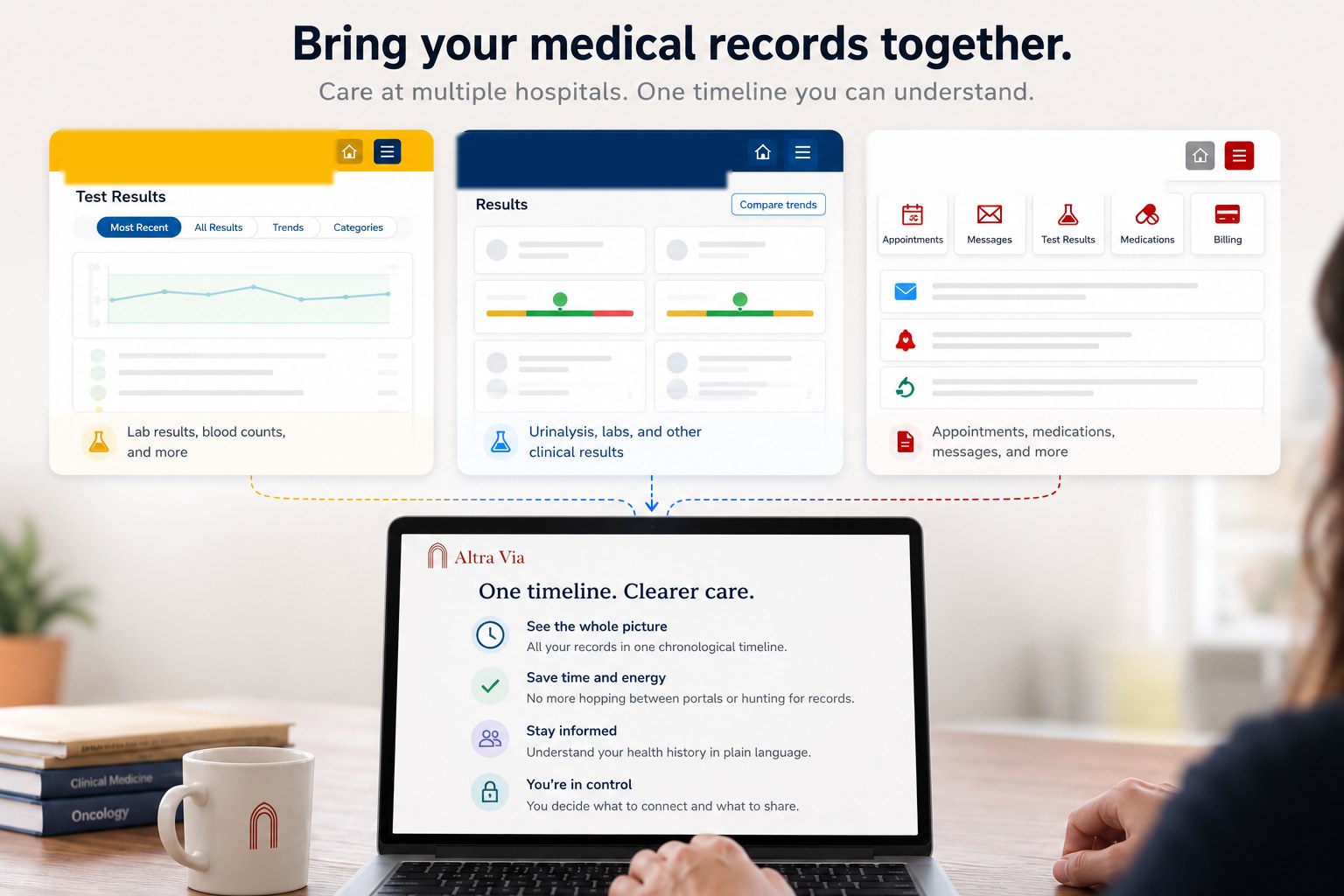
A patient receiving complex care may have records spread across several hospitals and health systems. Laboratory results may be available in one portal, imaging reports in another, medications in a third, and specialist notes somewhere else. Every institution captures an important part of the story, but none captures the whole.
Patients often become the only people who understand their complete medical history. Before each appointment, they download reports from multiple portals, organize files by hand, and repeat the same history to every new clinician. Valuable time is spent reconstructing information that already exists.
This is not a failure of any individual hospital or physician. It reflects the way modern healthcare has evolved, with independent systems that were not originally designed to function together. Standards such as FHIR and SMART on FHIR now allow patients to securely access and combine their own medical records across participating organizations. Our goal is to make that capability practical, understandable, and accessible.
How it works
The platform is built around patient-authorized access. Patients remain in control of their information throughout the entire process.
Connect your patient portals
Patients securely connect the healthcare organizations where they receive care using their existing patient portal accounts, including Epic MyChart and other compatible systems. Access is granted only with the patient's explicit permission using established healthcare interoperability standards.
Consolidate medical records
The platform retrieves available medical records from each connected institution, including clinic visits, laboratory results, medications, pathology reports, imaging studies, procedures, and clinical notes.
Organize the information
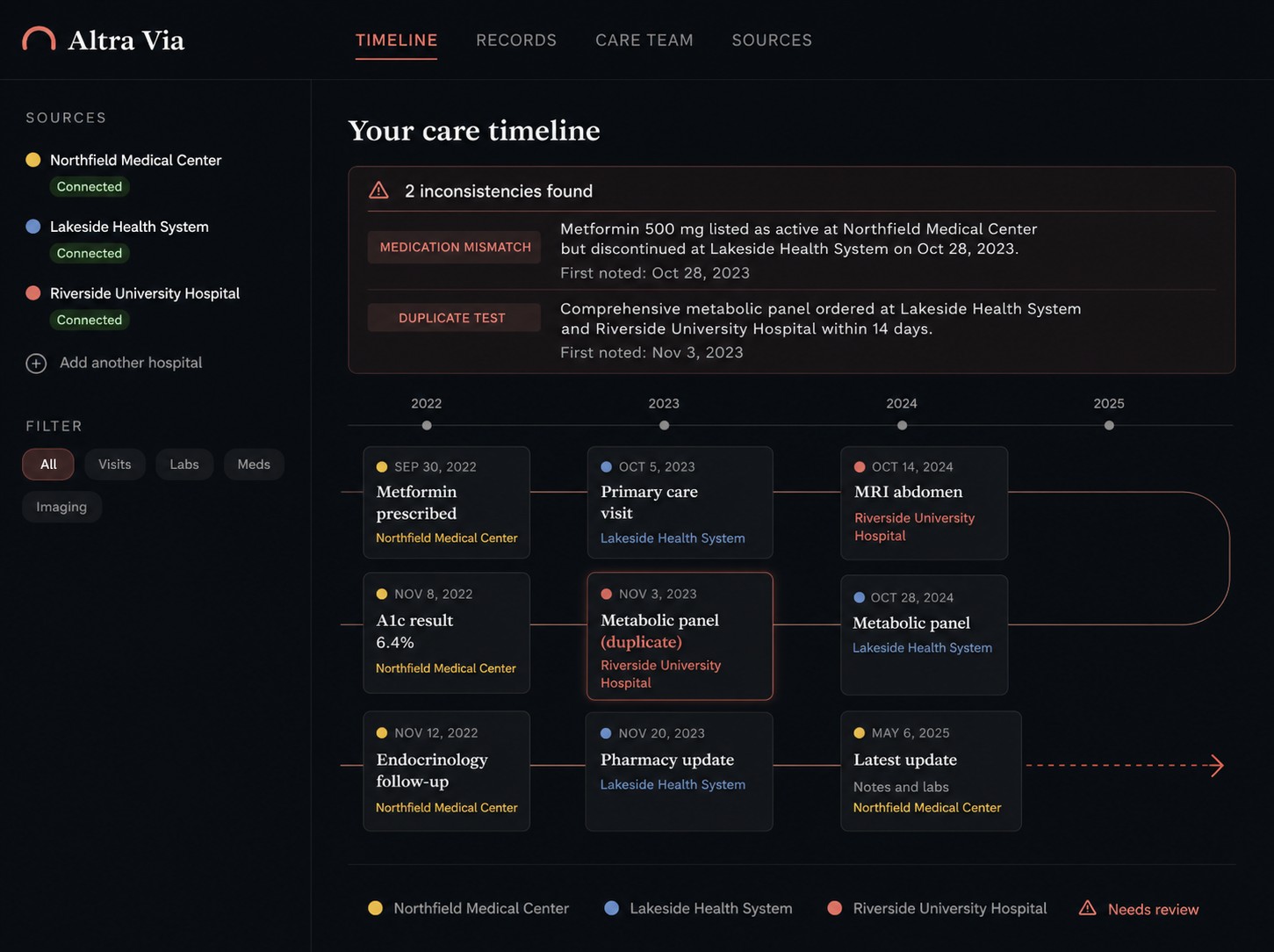
Automated tools organize records from multiple institutions into a single chronological timeline. Medications, diagnoses, laboratory results, and encounters are grouped across health systems, while potential inconsistencies or missing information are highlighted for patient review.
These tools help organize information. They do not diagnose disease, recommend treatments, or replace clinical judgment.
Review your complete history
Instead of moving between multiple patient portals, patients can review their healthcare journey in one place. Every record remains linked to its original source while being presented in a format that is easier to understand and navigate.
A first look at the patient experience
The illustration below shows an early concept of the unified timeline. The final interface will continue to evolve as development progresses.
Why we are building it
This project grew directly from our work supporting patients with rare diseases and other complex medical conditions.
Again and again, we encountered the same challenge. Patients spent hours gathering records before appointments, clinicians worked without complete information, and families became the unofficial coordinators of their own care because no single system connected everything together.
Medical records should help patients navigate care instead of becoming another obstacle. We believe patients deserve a clear, complete view of their own medical history, regardless of where they received care.
What makes this different
Several applications allow patients to store or exchange medical records. Our goal is different.
- Patient controlled. Patients decide which healthcare organizations to connect and remain in control of their information at every stage.
- Built on open standards. The platform uses FHIR and SMART on FHIR, which are widely adopted interoperability standards designed for secure, patient-authorized access to electronic health records.
- Designed for complex care. Instead of displaying records exactly as each hospital stores them, the platform organizes information across institutions into one coherent timeline that reflects the patient's complete healthcare journey.
- Technology that assists rather than decides. Automated tools help organize information and identify records that may deserve closer attention. They do not make medical decisions or replace physicians.
- Designed for patients. The interface is intended to help patients understand their own records more easily while preserving links to the original clinical documentation.
Looking ahead
Our first priority is building a platform that serves patients and families.
Future versions may allow patients to share their consolidated timeline directly with clinicians, making it easier to coordinate care across institutions while ensuring that patients remain in control of what information is shared. Any clinician-facing features will be developed only after the patient platform has been thoroughly tested and refined.
Important limitations
This platform is intended to help patients organize and better understand their medical records.
It does not provide medical advice, establish a clinician-patient relationship, diagnose disease, recommend treatments, or replace professional medical care. Clinical decisions remain the responsibility of licensed healthcare professionals.
Access to medical records is patient-authorized and read-only. No information is shared outside the patient's account unless the patient explicitly chooses to share it.
The platform is currently under development and is not yet available for public use.
← All services